


Hi folks, Simas here.
When we launched Bloom last October, we put the key voluntary biodiversity market (VBM) datasets together under one roof: schemes, transactions, projects, organizations and metrics. It was the “what” of the market.
But we knew that project developers, policy makers, advisory firms, conservation NGOs and financial institutions using the platform wanted to understand what most of this information actually means for them. In other words, they wanted the “why”.
Bloom 2.0 is one step closer to that “why”.
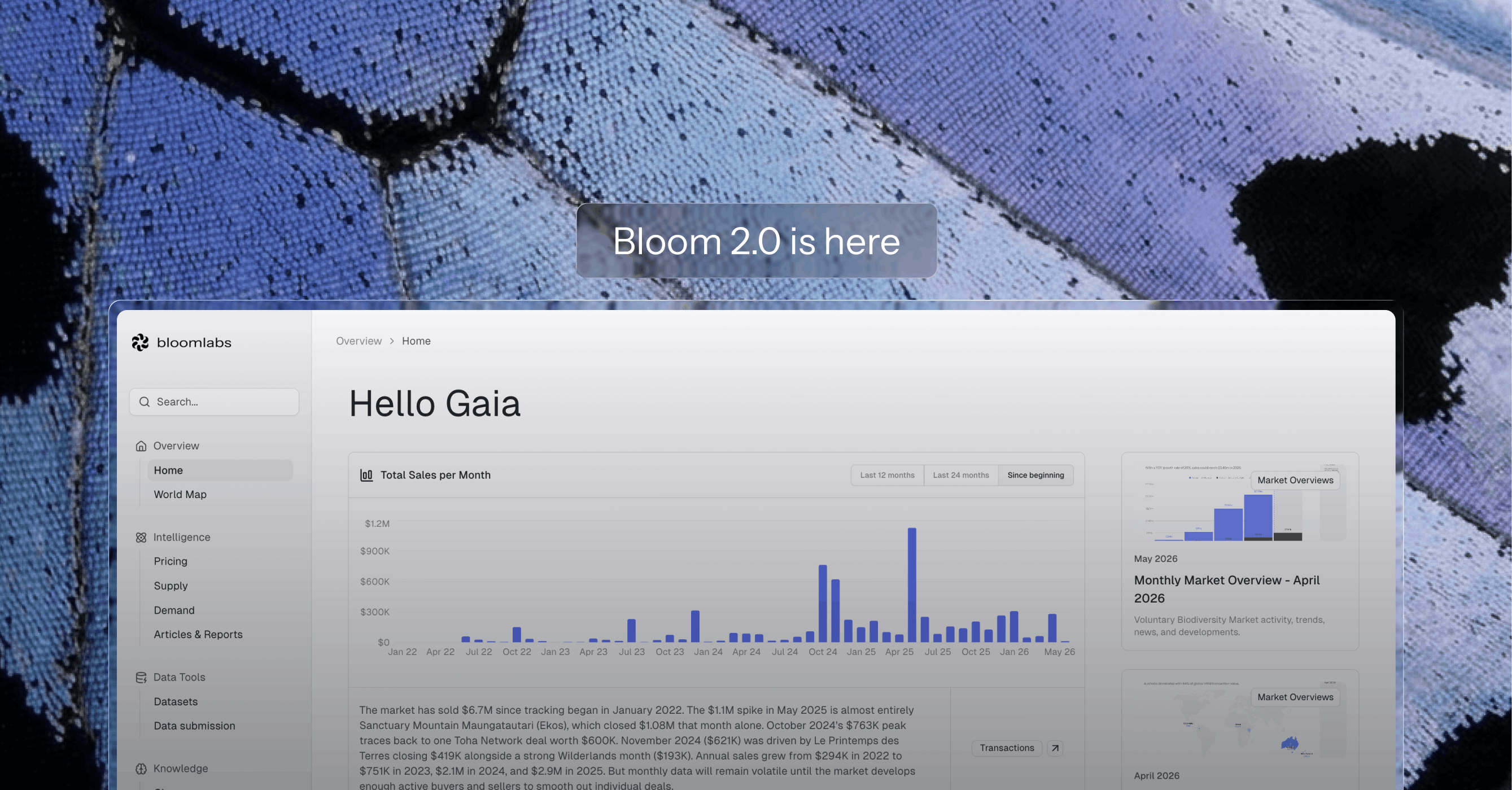
What’s new
After launching Bloom 1.0 last October, we learned a lot. Bloom 2.0 is these lessons put into practice. Here are a couple of main changes among many:
Data → intelligence
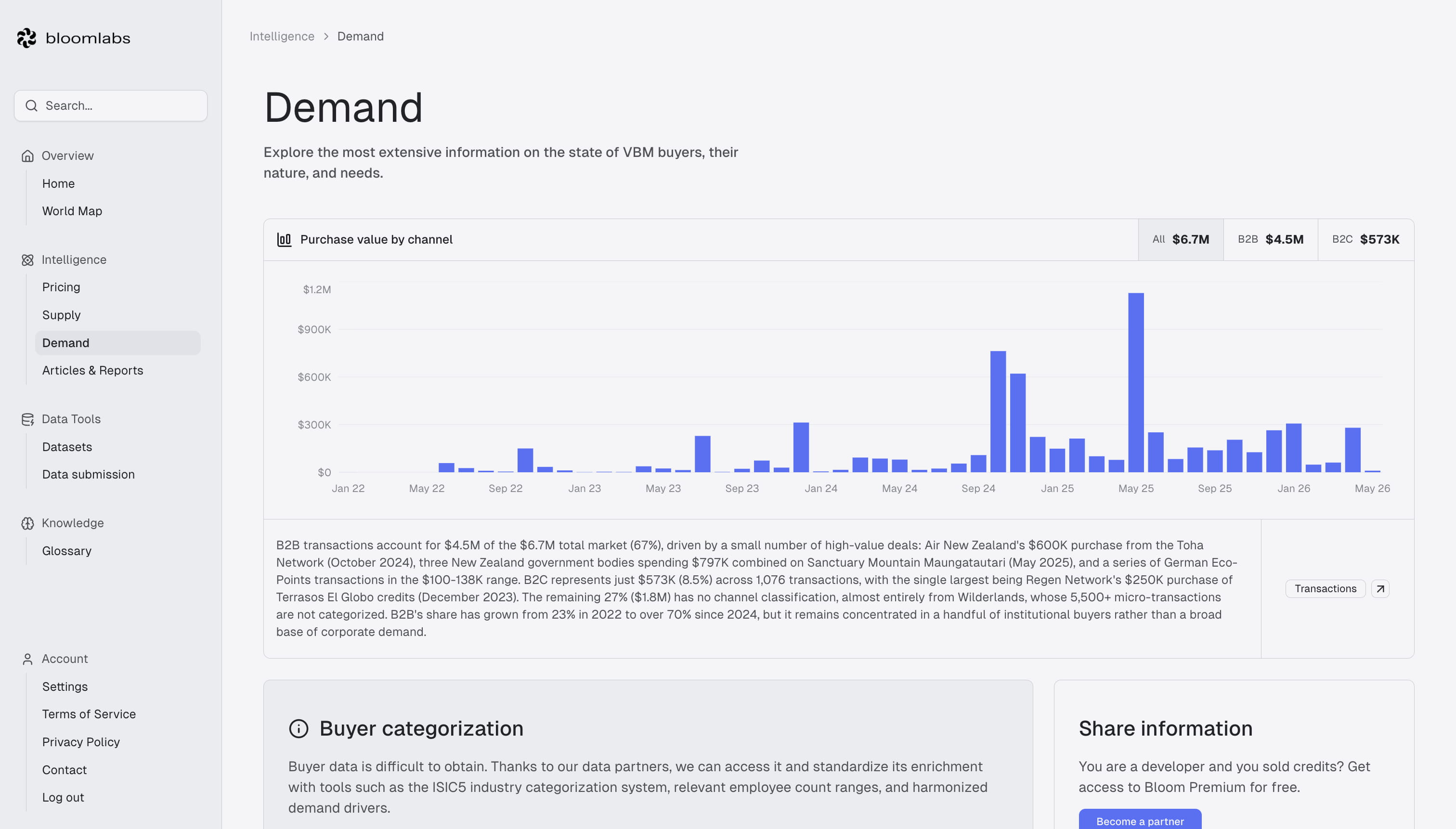
Many data points at this market stage are non-obvious. That is why now every chart has an up-to-date analysis paragraph, helping users understand the story behind the numbers. We also added a glossary of 50+ terms to help you navigate the language of this emerging market.
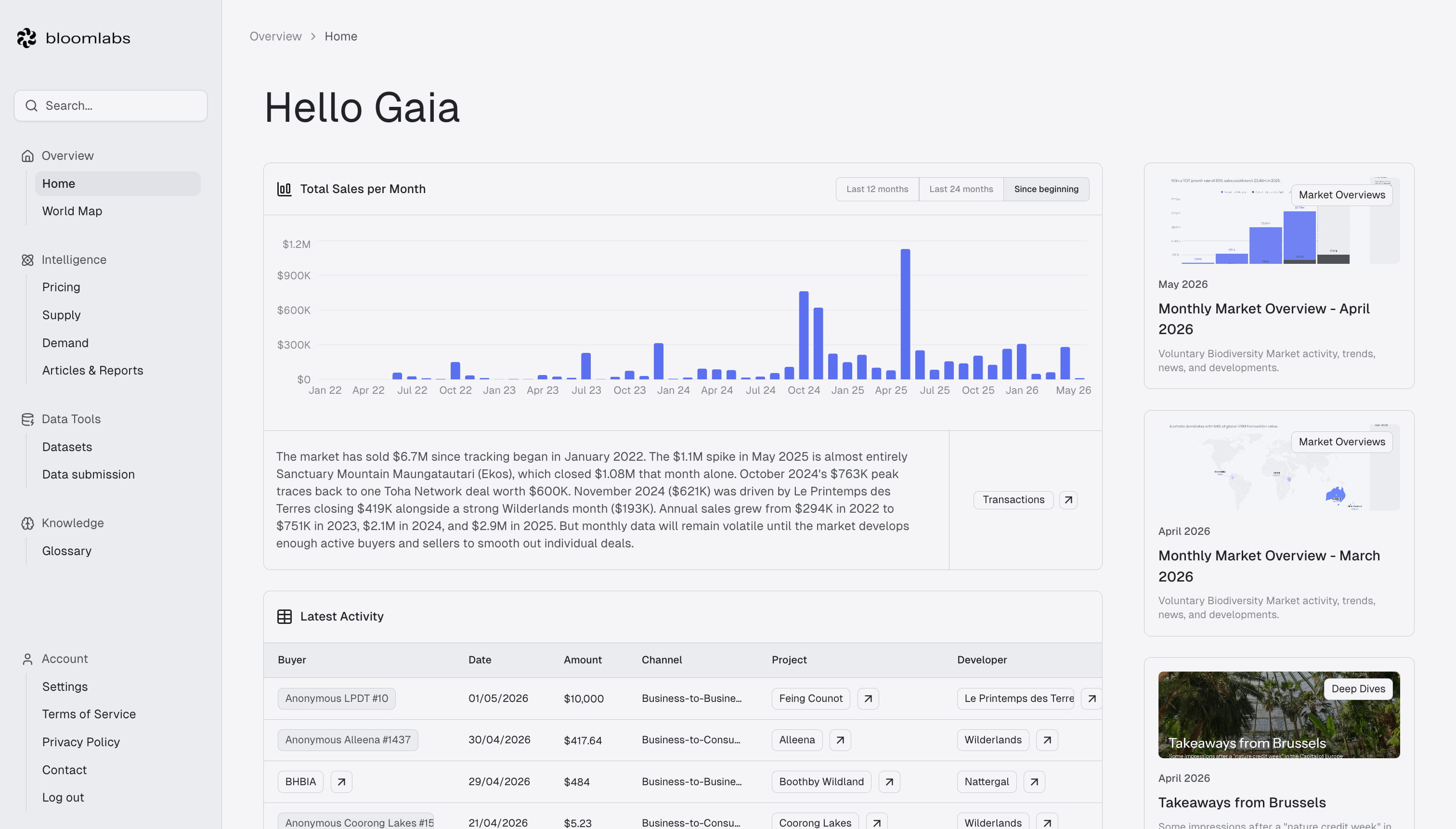
Functional analysis pages
The platform doesn’t just explore separate datasets anymore but combines them into functional themes for the key market areas: pricing, supply and demand.
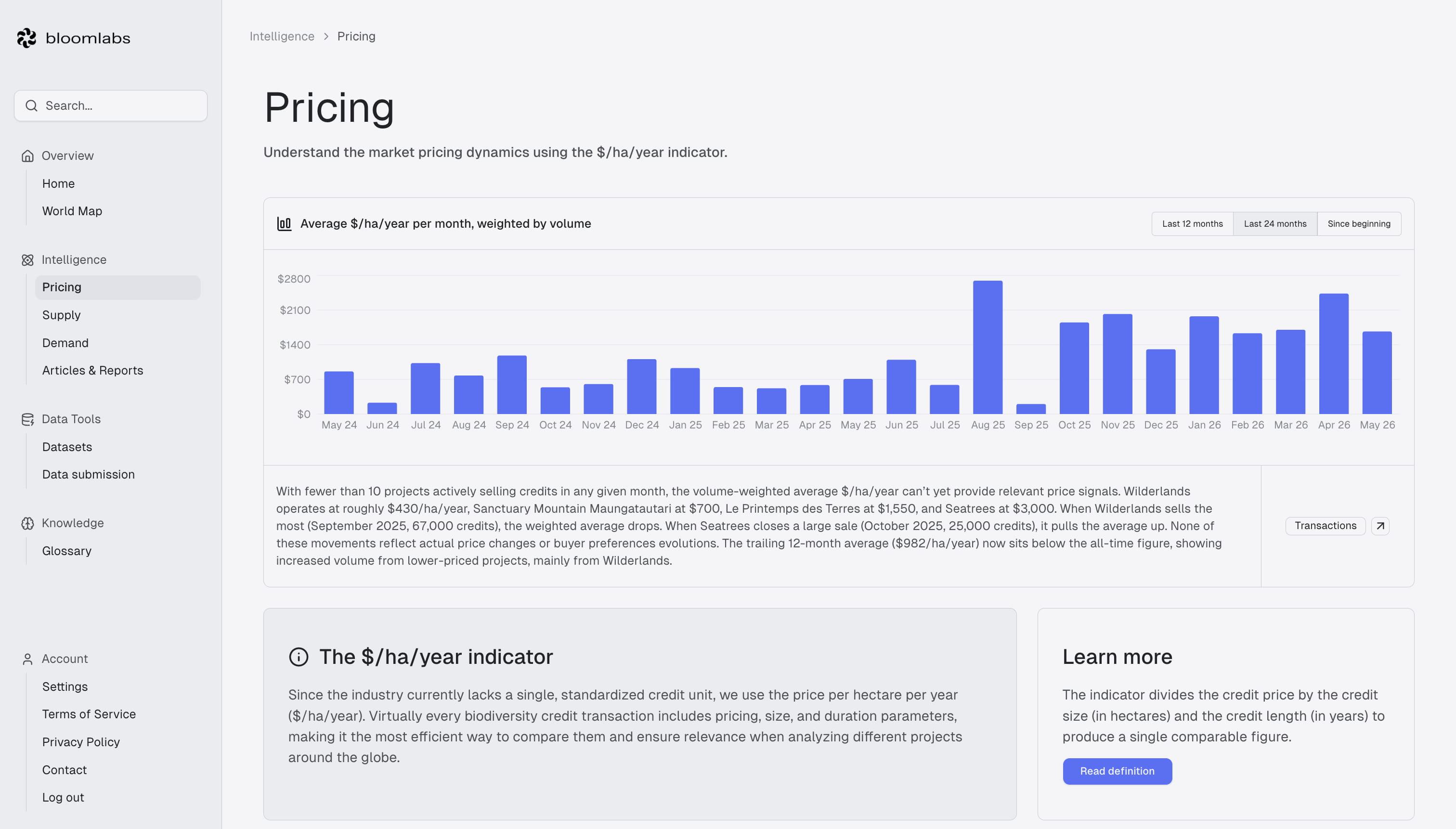
Pricing
A dedicated pricing insights page using the $/ha/year indicator was built to help you understand the market pricing trends, especially across different geographies.
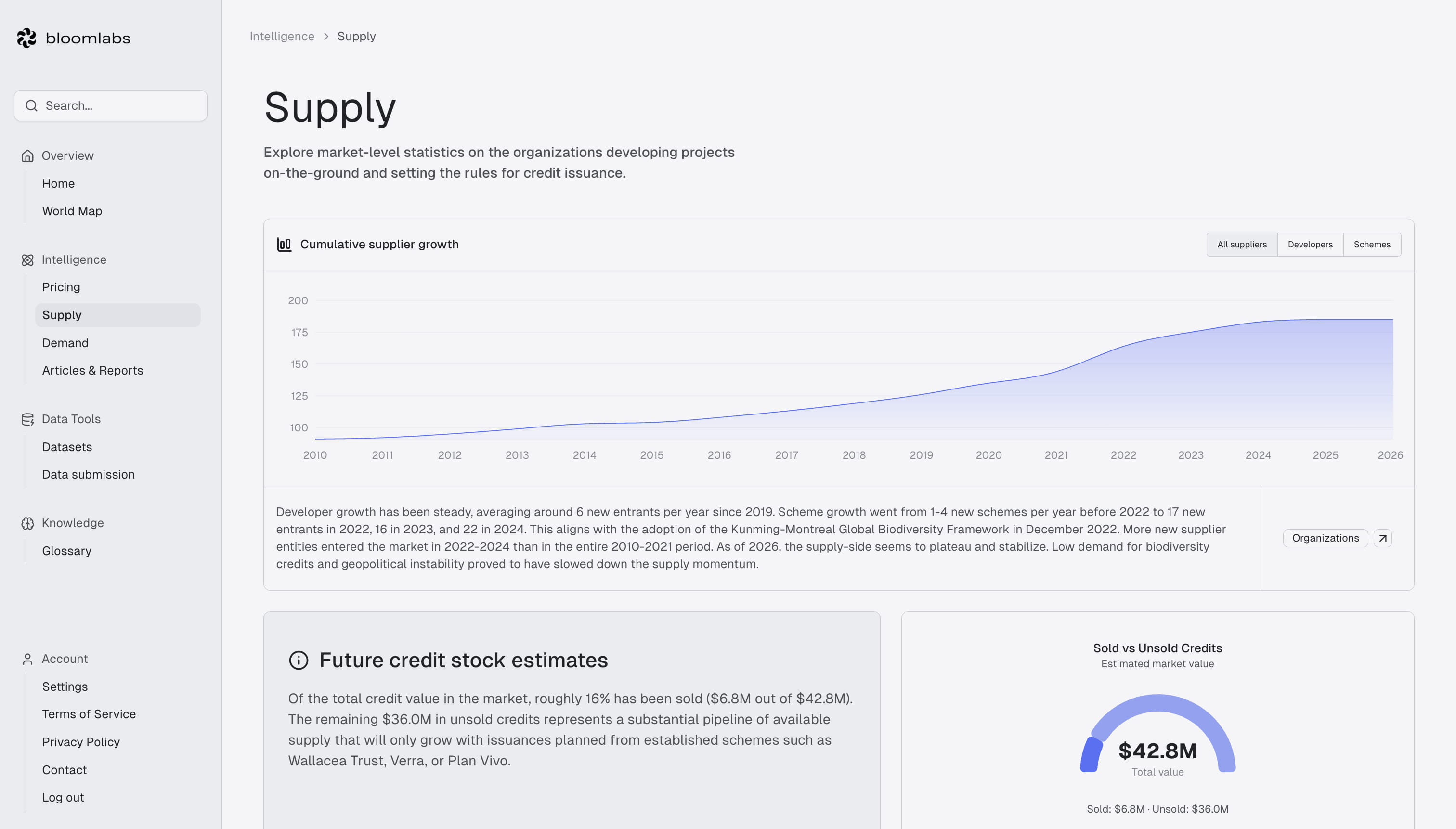
Supply
Here you can access aggregated data on project developers and credit schemes. Supplier growth, early successes and geographical trends are all there.
Demand
This page houses the most extensive demand-side data in the market. There you’ll find all historical monthly purchases for both B2B and B2C channels, purchases by buyer sector and size, countries by purchases and more.
World Map
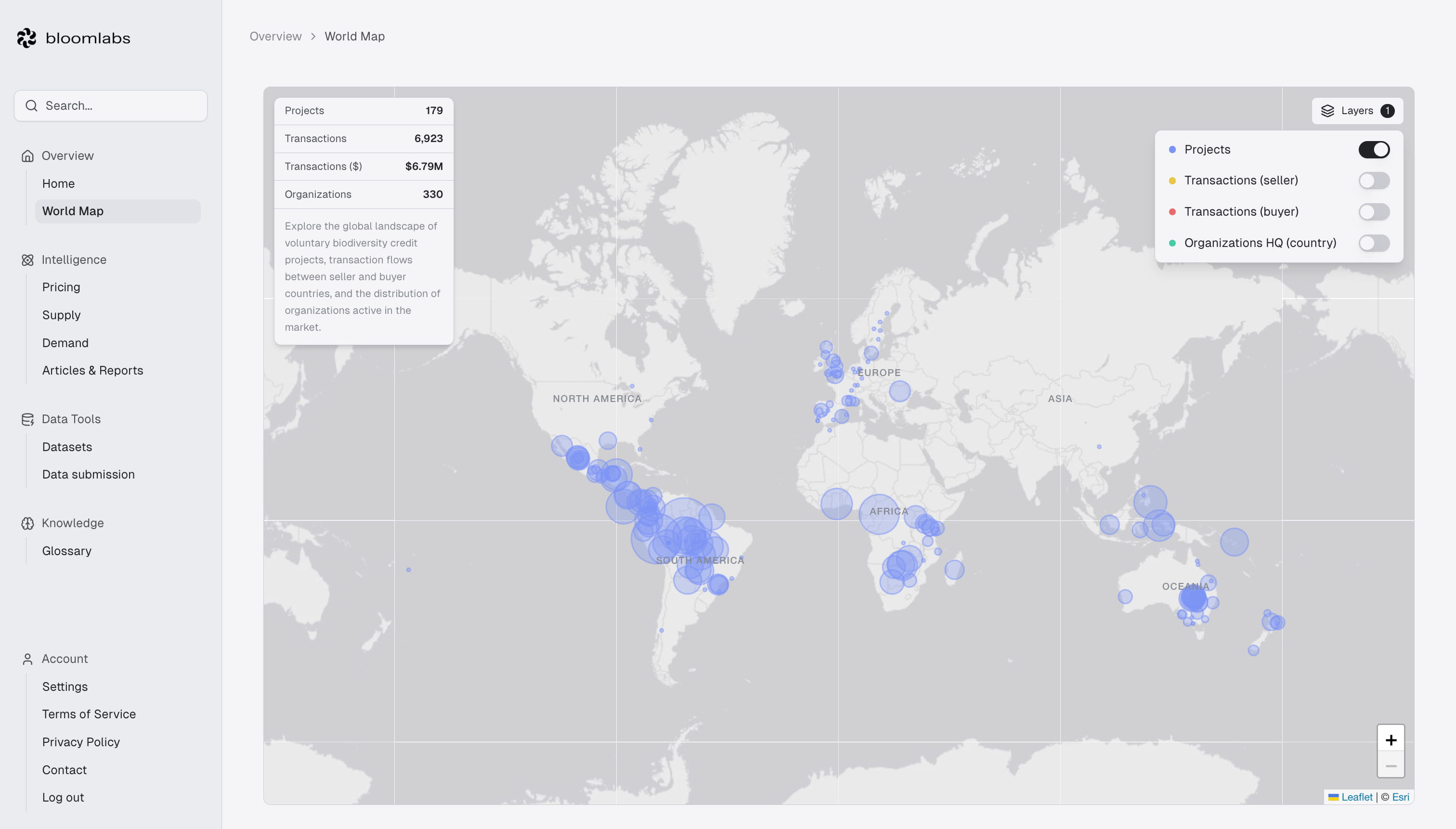
You will now be able to navigate the market across 4 layers geographically in an interactive world map. This is a powerful way to get a better sense of how and where the market operates.
More extensive data
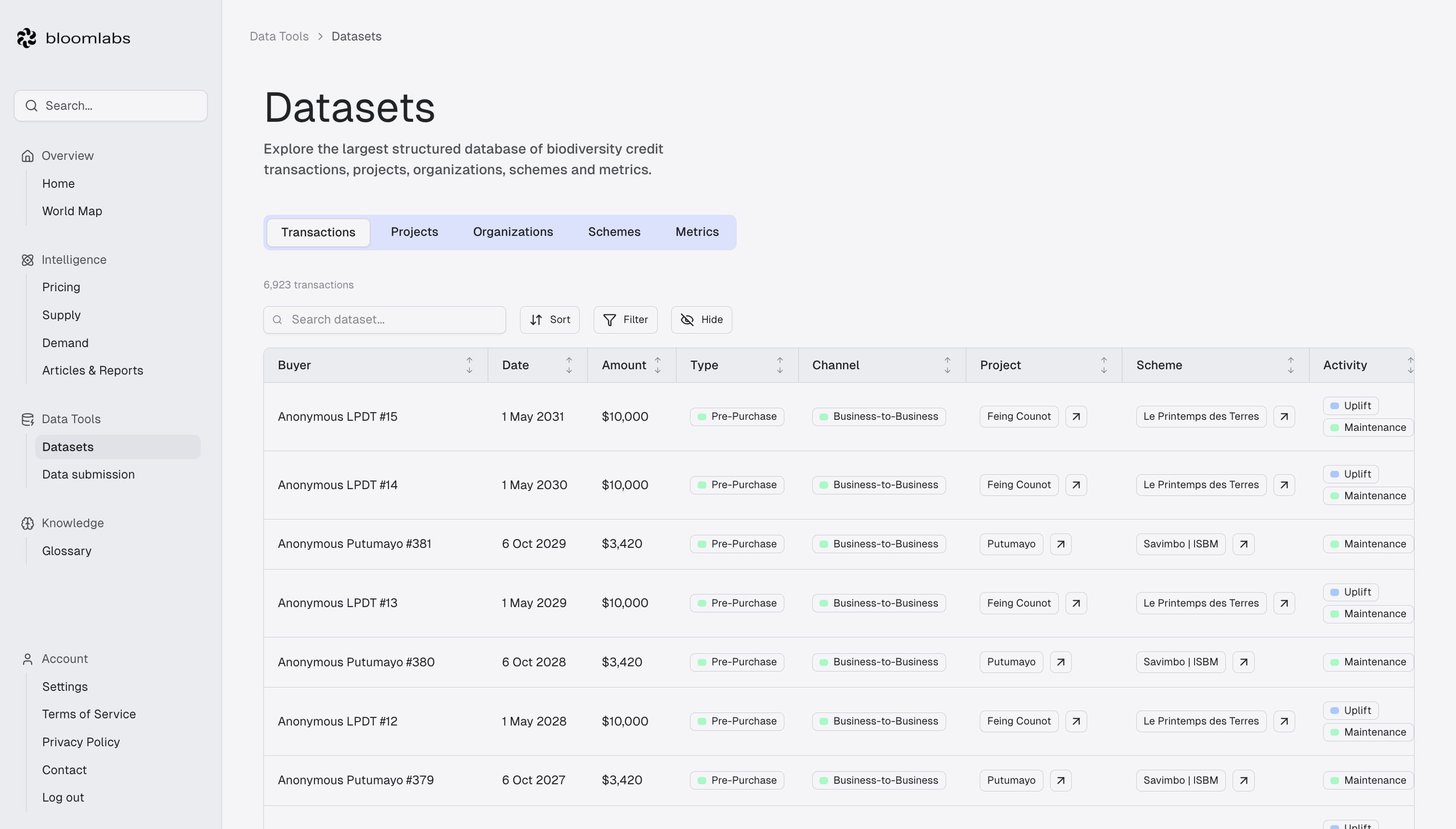
You have access to transaction-level pricing across 6,900+ voluntary biodiversity credit sales, profiles of 300+ buyers and suppliers, 170+ projects and close to a hundred biodiversity credit schemes. Every dataset has been expanded and cleaned since 1.0.
Data submissions
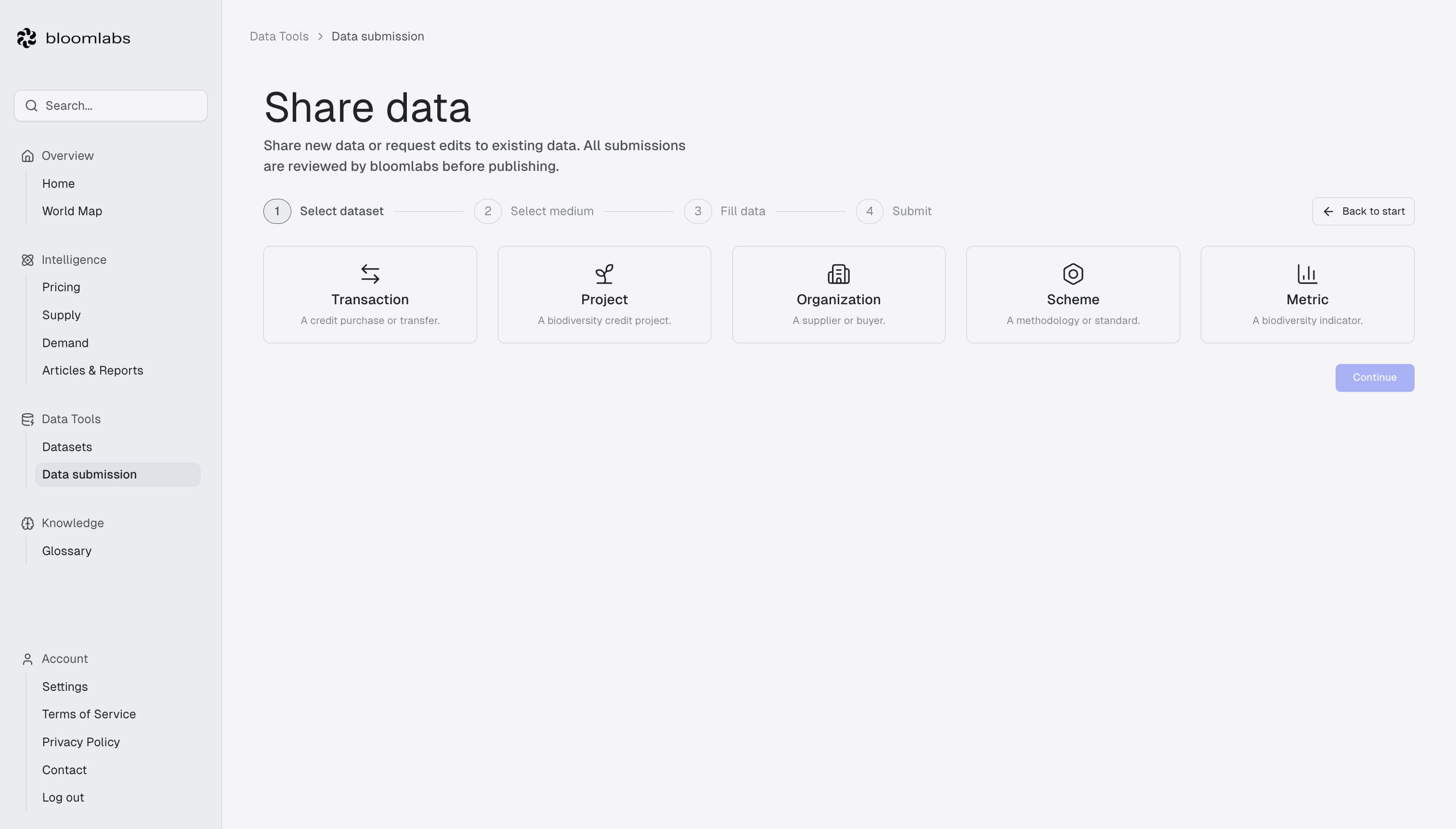
Now you will be able to submit and edit transactions, projects and other data points of your organization directly in the platform, both one-off and in bulk. This will help us ensure that your information more accurate and up-to-date.
Biodiversity credits are maturing
We are proud of what Bloom 2.0 can do and we are aware that there is much more to be done. Biodiversity credits are still in their design stage and the voluntary biodiversity market is the sandbox where these early experiments are happening. It is maturing with key suppliers nearing market entry and a growing number of countries exploring the mechanism. The EU Nature Credit roadmap is the perfect example of that.
Making the right market design decisions is a must at this formative stage. They require combining market expertise with transparent and accurate market data. We are excited to play a part in both areas.
Try it out and let us know what you think.