


We are excited to announce our most comprehensive report yet: The Benchmarking Report on Biodiversity Certification and Credit Systems for European Wetlands.
It is bloomlabs’ final report of a EU-funded project we are part of: LIFE Biodiv CrEW. The goal of the project is to pilot biodiversity credits in European wetlands from 2025 to 2027. In this project, we (bloomlabs) are responsible for:
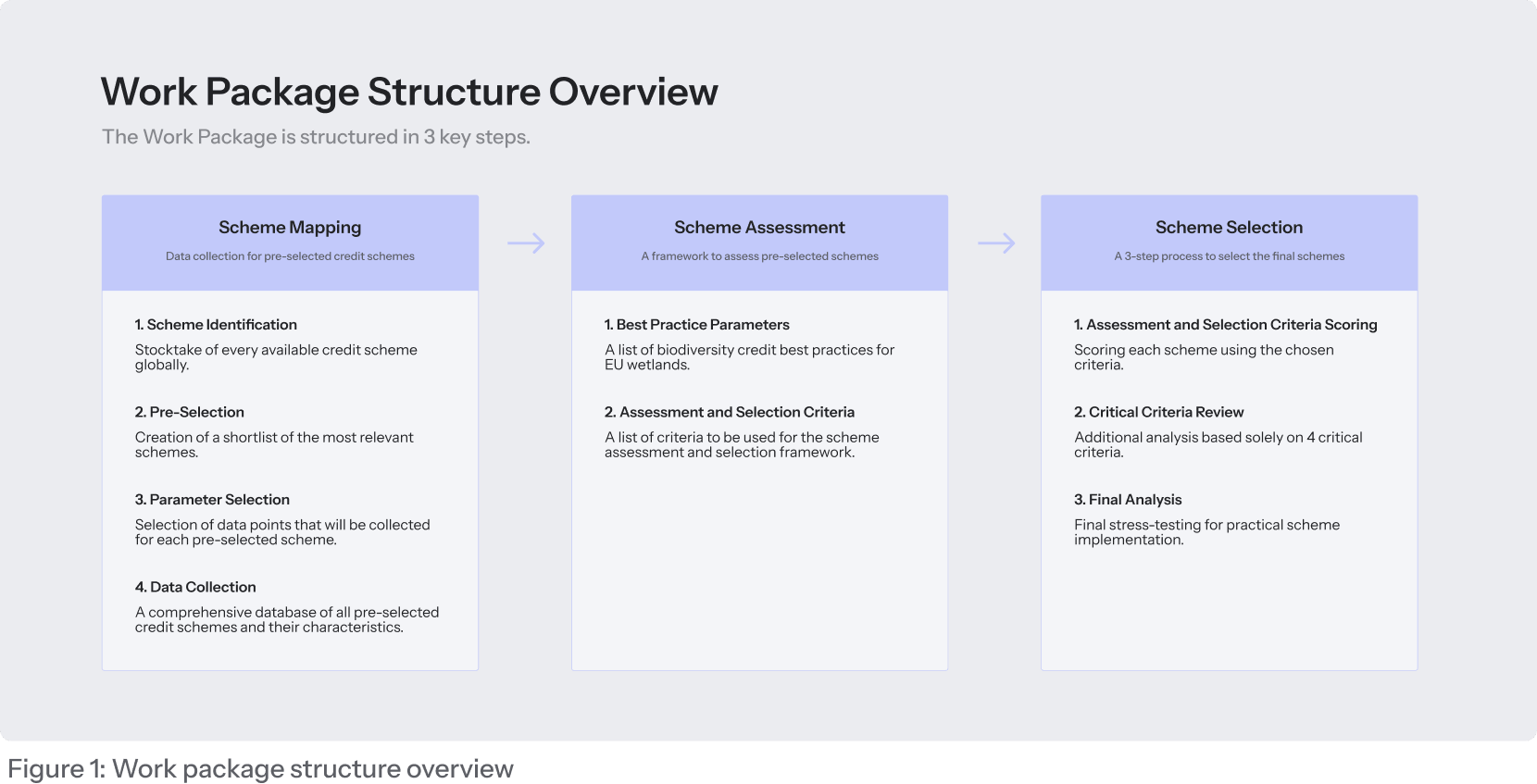
1. Mapping and systematically reviewing all relevant voluntary biodiversity credit schemes.
2. Defining best practice parameters and assessment criteria tailored to European wetlands.
3. Assessing and selecting the most suitable schemes for piloting under the project.
Why
Wetlands are generally considered the most economically valuable ecosystems on Earth per unit of area. They combine an incredible amount of ecosystem services all at once: carbon sequestration, water filtration, flood buffering, biodiversity habitat, food provision, groundwater recharge, and coastal protection.
These are just the practical, economic reasons. Visiting a wetland will quickly provide a number of non-economic reasons for why we should safeguard them.
We have added a bit more information on wetlands in the report itself but we trust that most reading the report are fully aware of their value.
The Process
1. Biodiversity Credit Scheme Mapping
Before conducting extensive data collection on a number of schemes, we first had to select them.
Scheme Pre-Selection Process
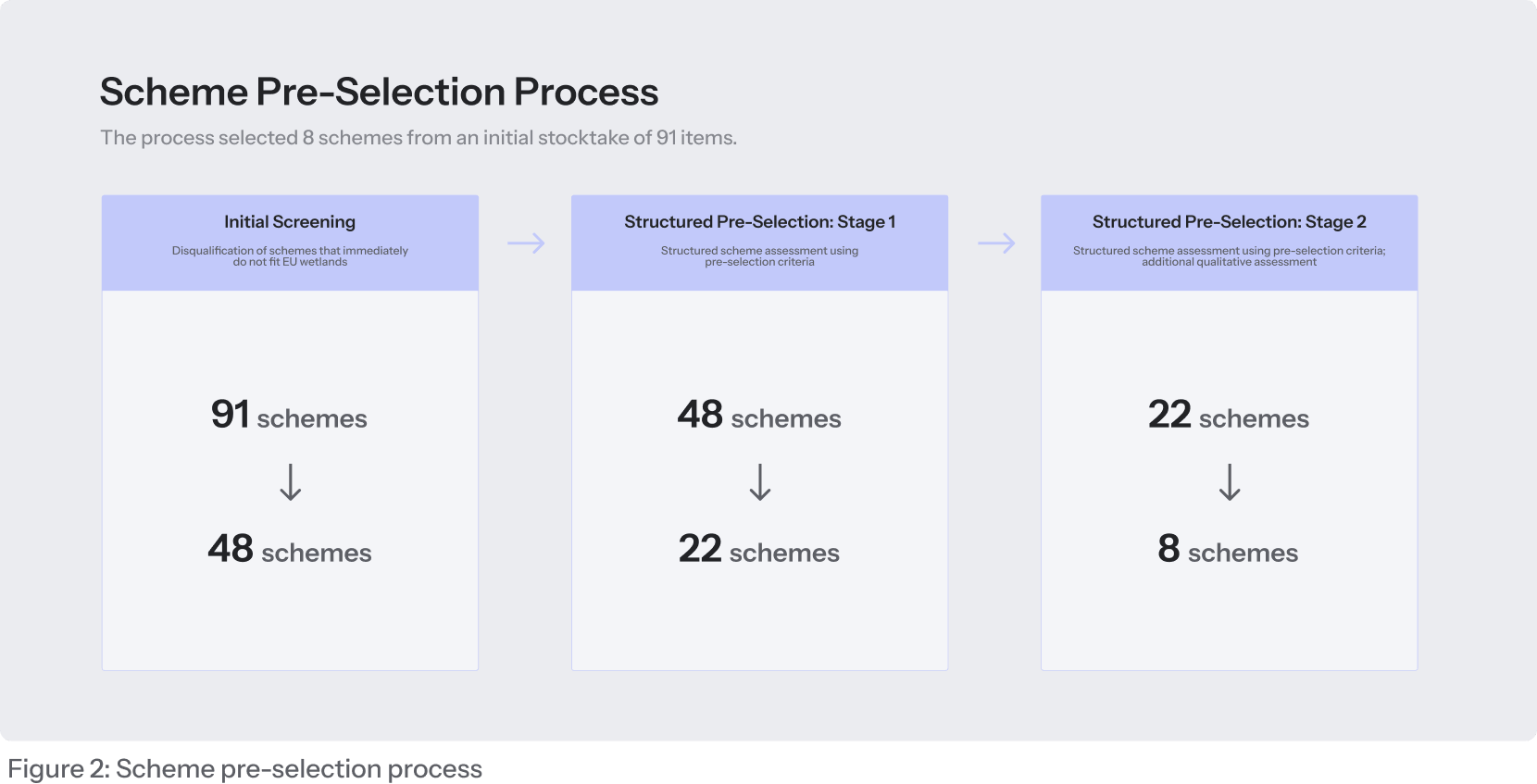
Although we already were tracking over 50 different voluntary biodiversity credit schemes on Bloom, to do an extensive biodiversity credit scheme mapping we had to start from scratch. At the end of the initial stocktake we had 91 schemes. After the initial screening and a number of increasingly more extensive and structured pre-selection stages, we were left with eight that were then analyzed in much more depth.
Pre-Selected Schemes
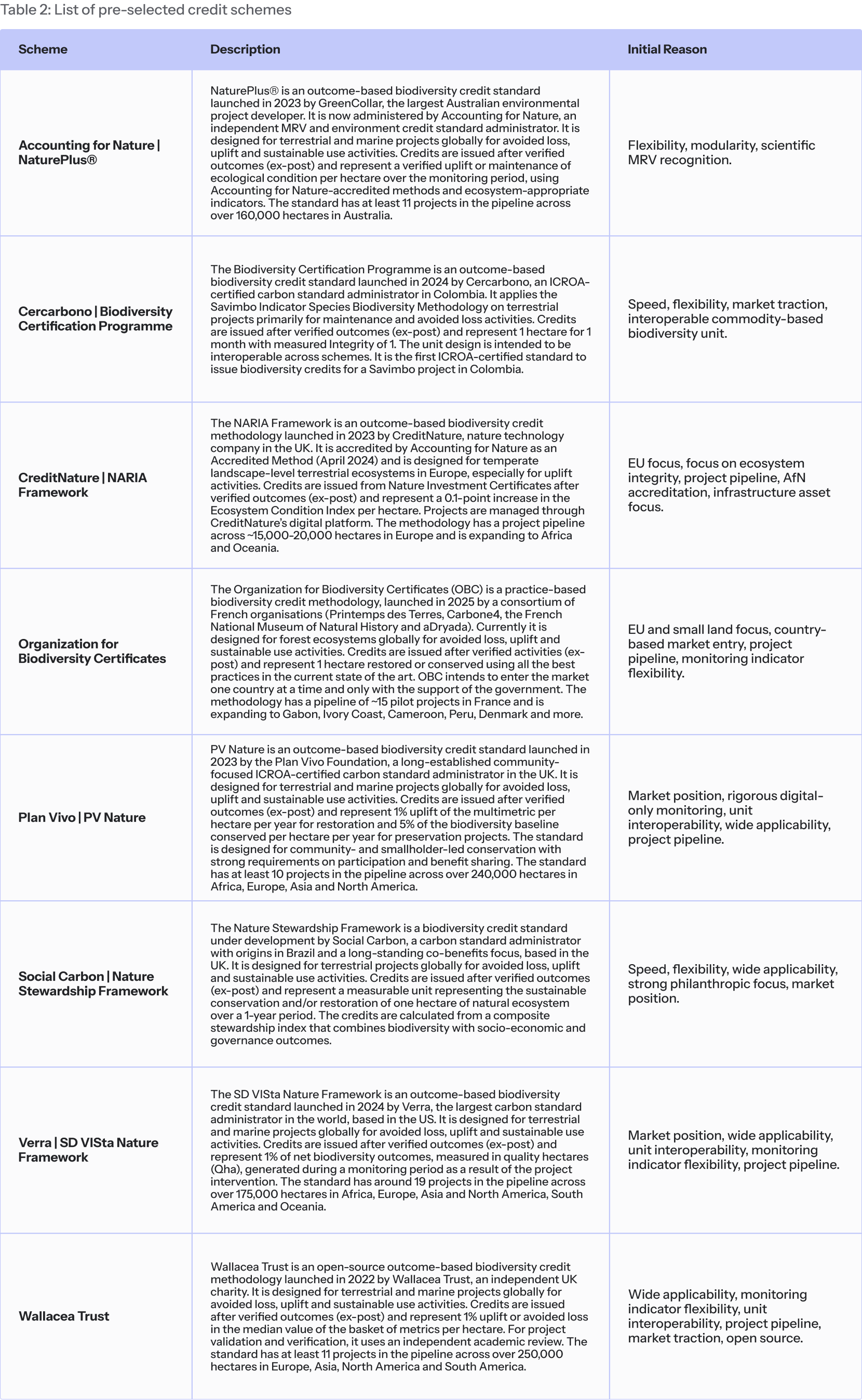
The pre-selected eight schemes were considered to have the most potential in the European wetlands (Table 2).
Data Collection
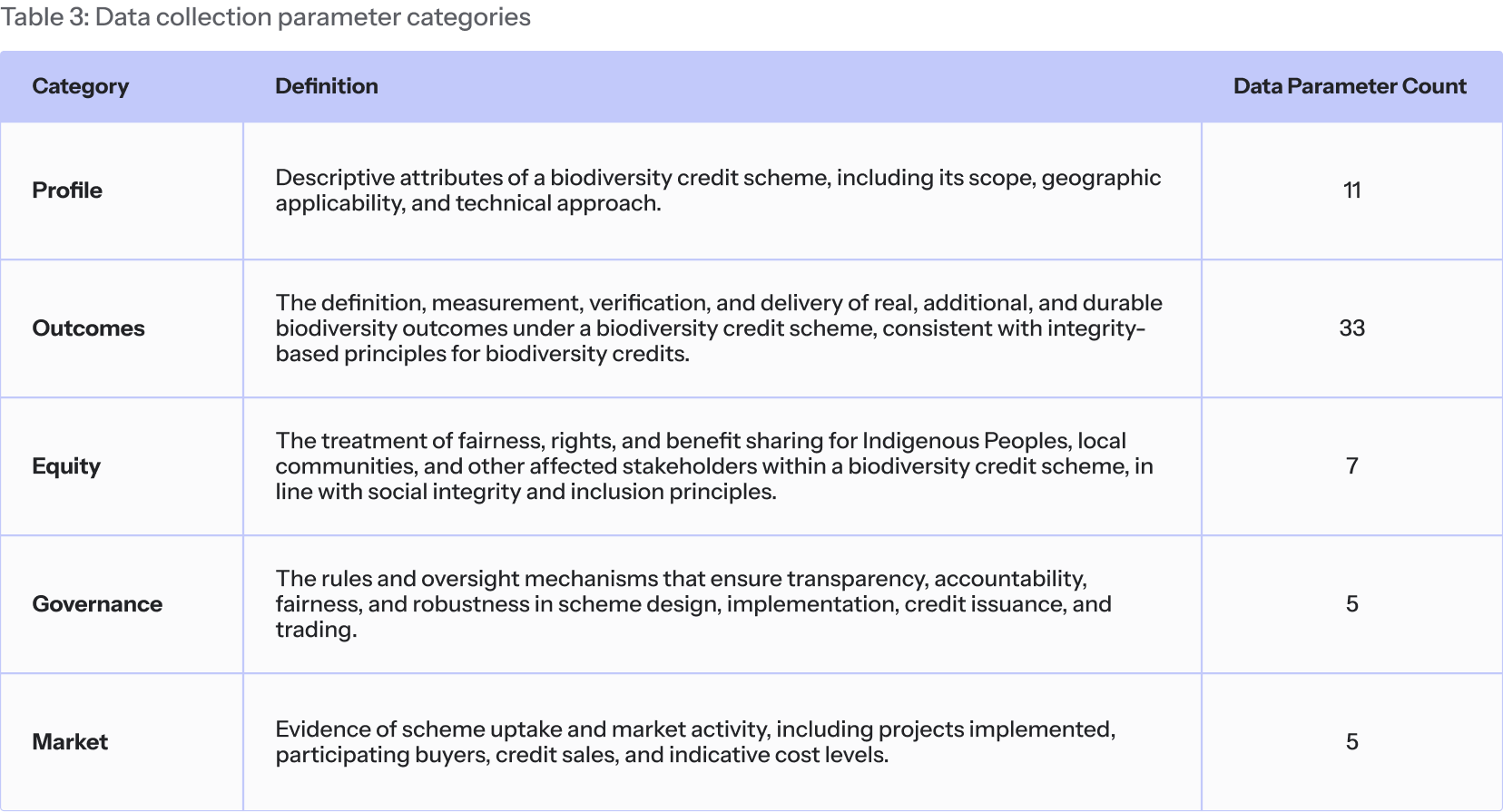
Once schemes were pre-selected, we defined over 60 parameters across five key categories: Profile, Outcomes, Equity, Governance and Market. We then collected data on each of these schemes across these parameters. Our focus was to have as much quantitative data and verifiable qualitative data as possible. That is why many qualitative data points were coupled with direct sources from the scheme documentation.
2. Scheme Assessment and Selection
We based the scheme assessment framework on the best practices in biodiversity credit markets. Beyond our own experience, the primary sources of the best practices were scientific literature, expert interviews, broader market standards, EU policy priorities, project steering committee and, most importantly, the High-level Principles (HLPs).
HLPs were co-developed by Biodiversity Credit Alliance (BCA), International Advisory Panel on Biodiversity Credits (IAPB) and World Economic Forum (WEF). These principles represent a comprehensive synthesis of nature market best practices and have become foundational in the voluntary biodiversity market. That is why we made a conscious decision to minimize any further market fragmentation and design the scheme assessment framework based on these principles. Inconsistent market guidance and definitions are some of the main sources of confusion for market participants. That is why our aim was to extend the HLPs by adjusting some existing principles and including additional ones for European wetlands.
Results
Following quantitative scoring, critical criteria filtering, and in-depth qualitative analysis, we selected two biodiversity credit schemes as most suitable for piloting in European wetlands:
Verra’s SD VISta Nature Framework, selected for its institutional credibility, alignment with ecosystem condition accounting used in corporate reporting, flexible indicator framework, support for credit stacking with carbon credits, and an active project pipeline, including Europe.
Wallacea Trust, selected for its scientifically rigorous, open-source, and flexible basket of metrics methodology, high ease of use, applicability across wetland types, and suitability for agile, learning-oriented pilots despite lighter governance structures.
Both schemes rely on very similar biodiversity indicators that focus on ecosystem composition and structure. Technically, this means we can use the same indicator set for both and directly compare results within the same project.
It is important to point out that the selection says nothing about the absolute quality of any of these schemes (more in disclaimers).
Learnings
The report allowed us to better validate various hypotheses we developed over the past years. Here are a couple we found particularly interesting:
Most schemes are implicitly designed for biodiversity-rich regions outside Europe
Many leading schemes assume large, intact landscapes with limited ownership fragmentation. These conditions are more common in regions like Latin America or Africa than in Europe. This raises important questions about how existing approaches can be adapted to smaller, fragmented European contexts.
The market requires supportive frameworks
Virtually all market participants would significantly benefit from market standardization, trust building and demand generation. The EU’s Roadmap towards Nature Credits is in a unique position to become a central anchor for building trust and alignment across the market not only in Europe but globally.
Voluntary markets face structural constraints in meeting certain high-integrity requirements
Voluntary environmental markets have some structural limits in meeting some high-integrity criteria. Without stable financing pathways, regulatory integration, and long-term stewardship mechanisms, durable biodiversity outcomes remain challenging.
Theoretical market principles and practical considerations are closely linked
Choosing a scheme is not just about scoring criteria - it is also about real-world feasibility. In practice, flexibility across ecosystems and monitoring, project types, and early buyer interest matters just as much as technical design.
Agricultural land and farmed landscapes remain only partially addressed
Most globally applicable schemes do not yet fully reflect the realities of agricultural land and farmed landscapes. There long-term commitments and revenue certainty are harder to secure.
Next Steps
The consortium is now working to apply these credit schemes across a number of identified project sites all across Europe. We will support the consortium but will not be leading any upcoming work. Although the project is still in the initial stage, we do see a lot of potential and are looking to apply our learnings at a bigger scale.
If you would like to learn more, discuss the report or the project with us, feel free to reach out to hello@bloomlabs.earth.
Finally, we want to thank the consortium of partners in this project:
NABU - project lead, largest German nature conservation NGO.
European Landowners’ Organization (ELO) - an organization that represents national membership organizations bringing together over 5 million private landowners all over Europe.
Eurosite - European network for natural site managers and conservation practitioners.
aeco - European peatland restoration project developer.
Sylva - an environmental services company specialized in structuring environmental assets.
The report would not have been possible without you.
Join our webinar
On April 22, we will participate in the webinar where we will share a bit more about our work for this project.
Disclaimers
Here is a shortlist of disclaimers that we expand on in the report:
Not a universal ranking
We did not set out to produce a universal ranking of biodiversity credit schemes. Our mandate was to identify which schemes are most suitable for testing in European wetlands at a specific point in time. We cannot and do not make claims about the absolute quality of these standards and methodologies. Meaningful evaluation today depends on context (e.g. ecosystem, geography, project developer needs, etc.).
Scoring involves judgement
While the framework is structured and evidence-based, some criteria required our qualitative interpretation. Again, the scores should be seen as decision support tools instead of definitive rankings or endorsements.
Uneven data availability across schemes
Our analysis mostly relies on publicly available information, which varies in depth and clarity across schemes. Where documentation is limited, certain parts can appear weaker simply because they are not fully disclosed.
Limited piloting scope
As a time-bound LIFE Preparatory Project, we were able to pilot only two schemes. This reflects project scope and learning priorities and not a claim that these are universally the best options.
Focus of the assessment
We placed stronger emphasis on how schemes quantify biodiversity outcomes and ensure scientific rigor than on broader governance dimensions. This reflects our project’s focus on measurable ecological performance in a European context, where many governance safeguards are already embedded in existing legal frameworks.
Rapidly evolving market
Biodiversity credit standards and methodologies continue to develop quickly. Updates introduced after our assessment cut-off date were not reflected in the analysis.
Great method and insight - thank you for sharing